
Lucky Fishing – A Detailed Overview of a Popular Fishing-Style Game
BigMumbai.Casa Lucky Fishing is a well-known fishing-style arcade game that is often featured on modern digital entertainment platforms. The game combines fast visual action, underwater themes, and simple interaction mechanics to create an engaging experience for users who enjoy dynamic and colorful gameplay.
Unlike traditional reel-based games, Lucky Fishing focuses on real-time screen activity. Players interact with moving targets instead of waiting for spinning results. This makes the game feel more active and visually exciting, especially for users who prefer quick feedback and constant motion.
This article presents Lucky Fishing from an informational and structural perspective, helping readers understand how the game is designed, how it looks, and why it is popular on many platforms.
What Is Lucky Fishing?
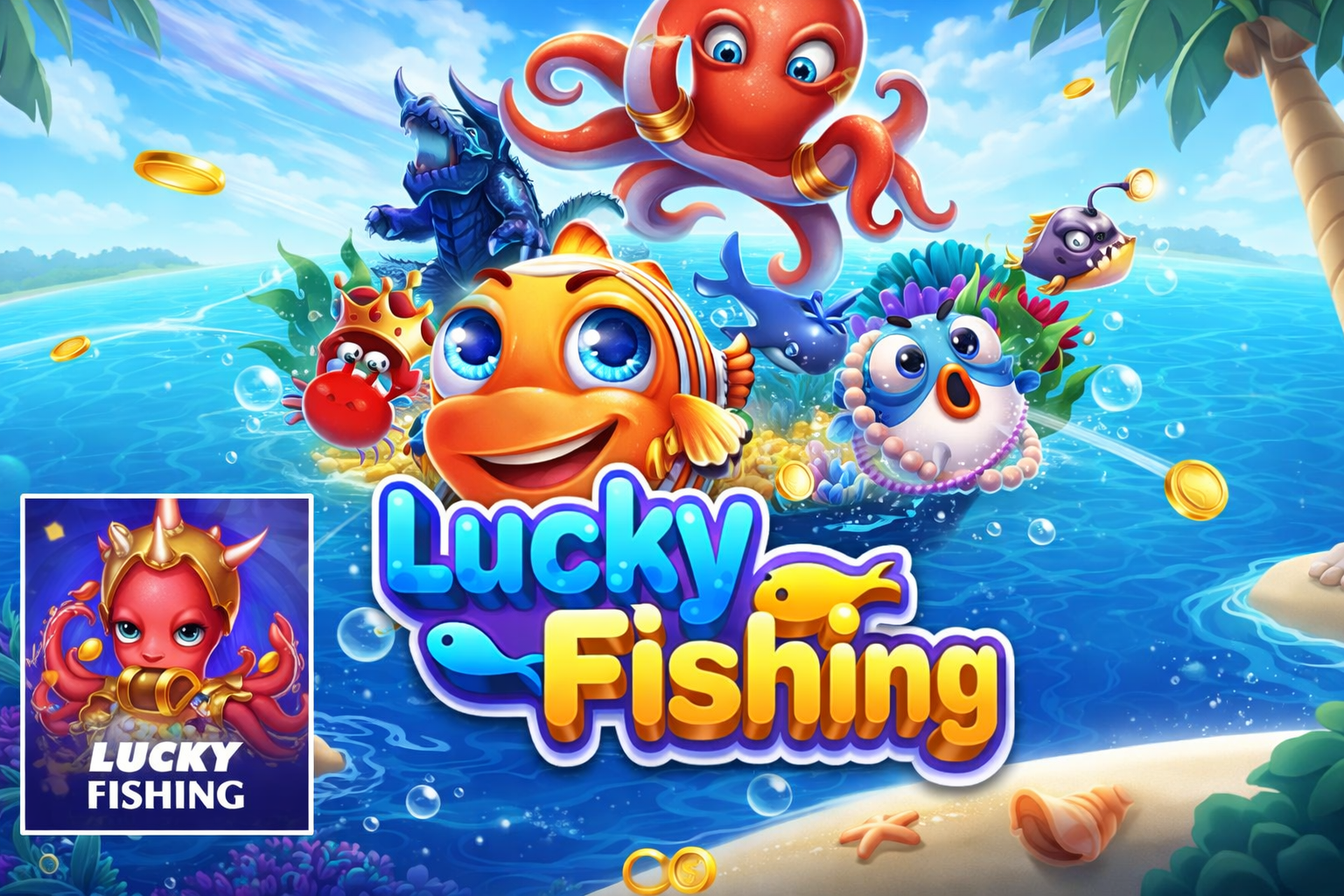
The game belongs to the fishing arcade game category, sometimes also called fish-shooting or fish-hunting games. The core concept is simple: the screen displays a lively underwater scene filled with different types of fish, and users interact with these targets through a shooting or tapping mechanism.
Each fish type is designed with unique visuals, movement speed, and on-screen behavior. Some move slowly in groups, while others appear briefly and swim quickly across the screen. This variety keeps the gameplay visually interesting and prevents it from feeling repetitive.
Lucky Fishing is usually presented as a demo or entertainment format, focusing on interface design, animation flow, and interaction rhythm.
Game Theme and Visual Design
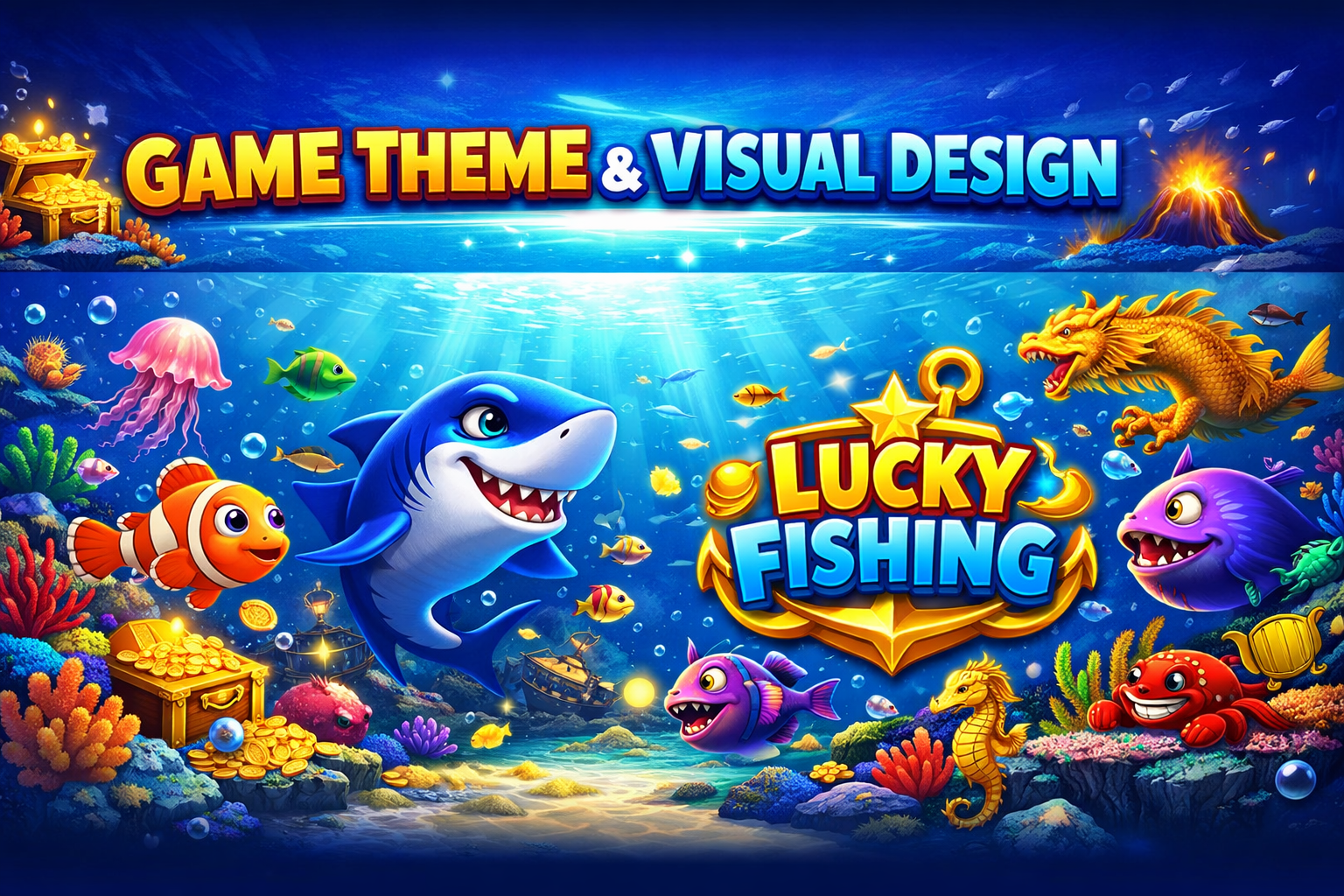
One of the strongest points of this game is its visual presentation. The game uses a bright underwater theme with:
- Blue ocean backgrounds
- Coral reefs and sea plants
- Animated bubbles and light effects
- Colorful fish and sea creatures
The graphics are designed to be clear and eye-catching without overwhelming the player. Fish outlines are easy to recognize, even on smaller screens, making the game suitable for mobile devices.
Visual effects play an important role. When a fish is hit or captured, the game shows short animations such as flashes, waves, or icons. These effects provide instant visual feedback and help users understand what is happening on the screen.
Core Gameplay Structure
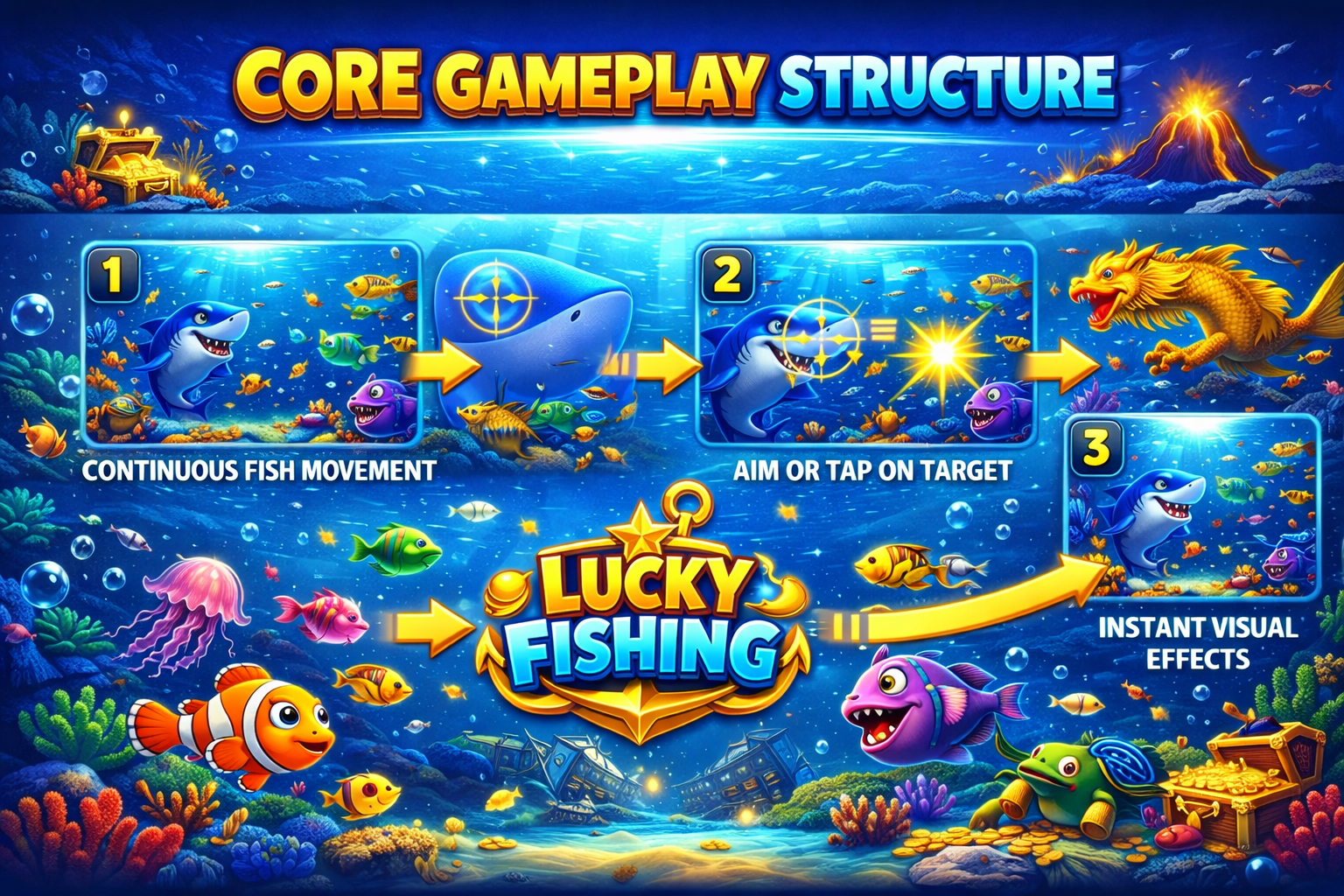
Lucky Fishing uses a real-time interaction model instead of turn-based or round-based systems. The gameplay flow typically includes:
- The underwater scene appears with continuous fish movement
- Users aim or tap on selected targets
- Visual effects show interaction results instantly
- New fish continue to appear without stopping the screen
This continuous flow creates a fast and engaging rhythm. There are no long waiting periods, which makes Lucky Fishing appealing to users who enjoy quick reactions and constant activity.
The game interface is usually minimal, keeping attention focused on the main screen rather than menus or text.
Fish Types and On-Screen Variety
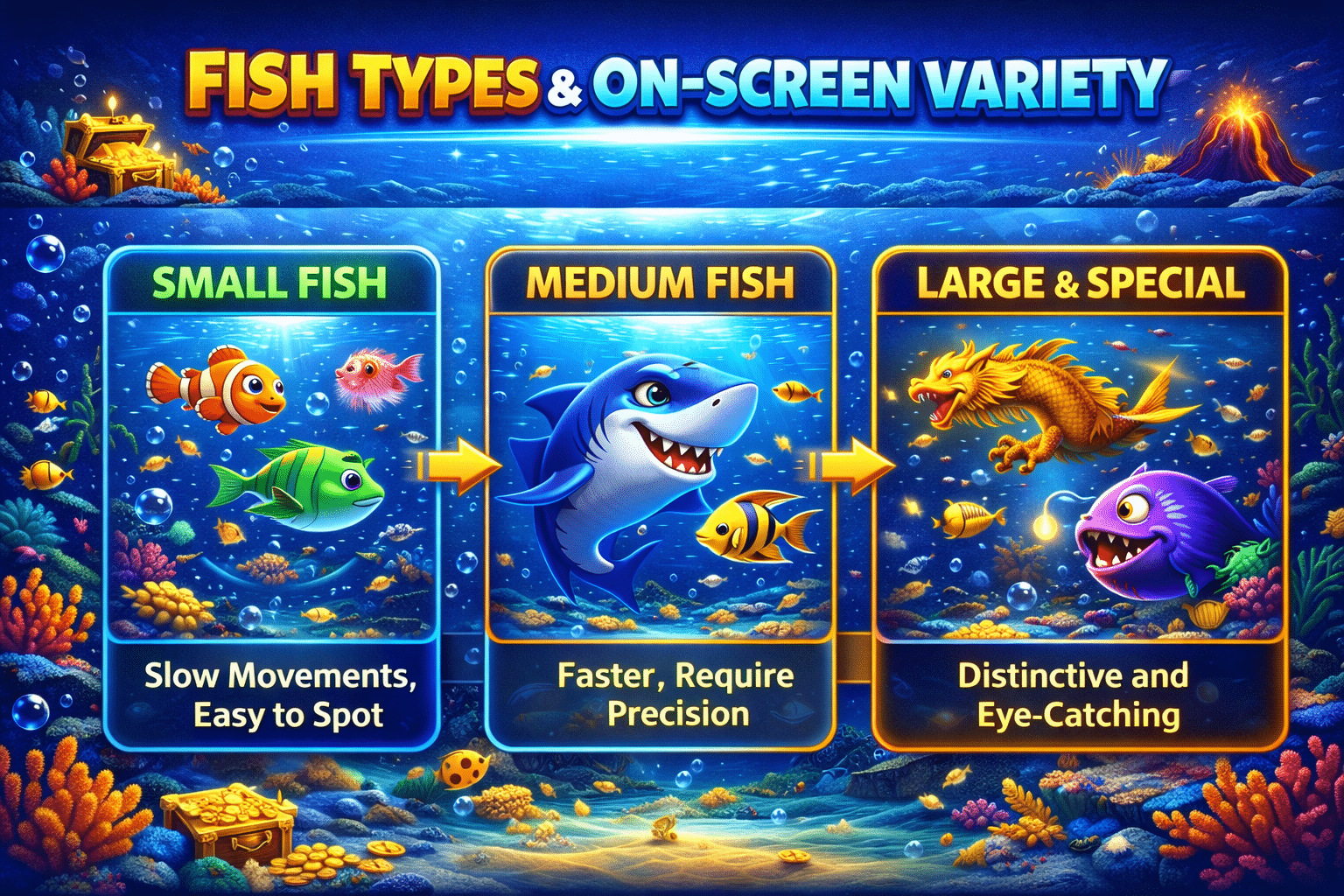
The game includes a wide range of fish designs to add depth and variation. Common categories include:
Small Fish
Small fish are commonly displayed in clusters and swim across the screen at a gentle pace. Their simple movement patterns and clear appearance make them easy to notice, allowing users to quickly become familiar with how interaction in the game works. These fish often serve as an introduction, helping players understand timing, aiming, and on-screen responses in a natural and intuitive way.
Medium Fish
Medium fish are designed with more visual detail and move at a quicker speed compared to smaller ones. They usually appear on their own rather than in groups, making them more noticeable but also more challenging to interact with. Because of their faster and less predictable movement, users need better timing and attention when targeting these fish.
Large Fish and Special Creatures
Larger fish and special sea creatures are created to attract immediate attention on the screen. They appear less often than smaller targets and are usually emphasized through bright highlights, glowing outlines, or distinctive animation effects. Their presence adds a sense of importance and visual focus to the gameplay.
This mix of different fish sizes and movement styles forms a layered visual environment, where multiple targets travel in various directions and at different speeds simultaneously, making the screen feel active and dynamic.
Interface Layout and Controls
The Lucky Fishing interface is designed to be intuitive and easy to understand. Common layout features include:
- A full-screen underwater display
- Simple control icons placed at screen edges
- Clear visual indicators for interaction feedback
Most platforms design the controls so that new users can start interacting without reading long instructions. This makes the game accessible to a wide audience, including first-time players.
The focus remains on visual clarity and responsiveness, which is essential for fast-paced arcade-style games.
Sound and Animation Effects
Sound design adds another layer of immersion to Lucky Fishing. The game often includes:
- Soft background ocean sounds
- Light music loops
- Short sound effects for interactions
These sounds are not overly loud or distracting. Instead, they are designed to complement the visuals and create a relaxing but engaging atmosphere.
Animations are smooth and consistent. Fish movement, water effects, and interaction animations all follow a unified style, helping the game feel polished and professional.
Why Lucky Fishing Is Popular
Lucky Fishing remains popular on many platforms for several reasons:
- Easy-to-understand mechanics
- Bright and appealing visuals
- Continuous, fast-paced action
- Minimal learning curve
- Strong mobile compatibility
Because the game does not rely on complex rules, users can quickly understand how it works just by watching the screen. This makes it suitable for casual exploration and interface demonstration.
Informational and Demo-Only Presentation
On informational websites, Lucky Fishing is usually presented for demonstration and reference purposes only. The focus is on:
- Understanding game layout
- Observing interface design
- Analyzing visual flow and interaction logic
The content does not represent real-money gameplay or financial participation. Instead, it helps users, designers, and researchers understand how fishing-style games are structured and why they are commonly used in digital entertainment platforms.
Responsible Viewing and Understanding
Lucky Fishing should be viewed as a visual and interactive example of arcade-style game design. Readers are encouraged to approach the game with a learning mindset, focusing on how elements are arranged on the screen and how feedback is delivered visually.
Responsible presentation ensures that the game is understood as part of a broader study of digital interface design rather than a financial activity.
Conclusion
Lucky Fishing is a visually rich and fast-paced fishing-style game that highlights the strengths of real-time interaction and underwater design themes. With colorful fish, smooth animations, and simple controls, the game demonstrates how arcade mechanics can be adapted into modern digital platforms.
From an informational perspective, Lucky Fishing serves as a strong example of how continuous gameplay, clear visuals, and intuitive interaction can create an engaging user experience. Its popularity comes not from complexity, but from clarity and visual appeal.
For anyone interested in understanding fishing-style game layouts, animation flow, or interactive screen design, Lucky Fishing provides a clear and accessible reference.