
Mini Games Category Overview – Minesweeper Interface Experience
The Mini Games category is designed to deliver fast, intuitive, and visually clear interactive experiences. Among the popular titles in this category, stands out as a classic logic-based game that has been reintroduced with a modern interface and mobile-optimized design.
This article provides an overview of the Mini Games category, with a focus on the BigMubai Minesweeper game interface, layout structure, and user interaction flow.
Overview of the Mini Games Category
The Mini Games section brings together compact game formats that prioritize simplicity and quick interaction. Instead of complex rules or long sessions, Mini Games are built for short rounds and easy understanding.
Key characteristics of the Mini Games category include:
- Clean and lightweight interface design
- Fast loading and responsive interaction
- Simple control systems
- Clear visual feedback for each action
- Mobile-first layout optimization
These features make Mini Games suitable for users who prefer quick exploration and straightforward gameplay interfaces.
Introduction to Minesweeper in Mini Games
It is a well-known logic puzzle game adapted into the Mini Games category with a refreshed visual style. The core concept remains familiar, while the interface has been simplified to fit modern mobile and web environments.
In the Mini Games collection, it is positioned as:
- A strategy-focused game
- A grid-based logic experience
- A calm, thinking-oriented alternative to fast-paced mini games
Minesweeper Interface Design
The Minesweeper interface is built around clarity and precision. Every element on the screen serves a functional purpose, helping users focus on decision-making rather than visual distractions.
Interface highlights include:
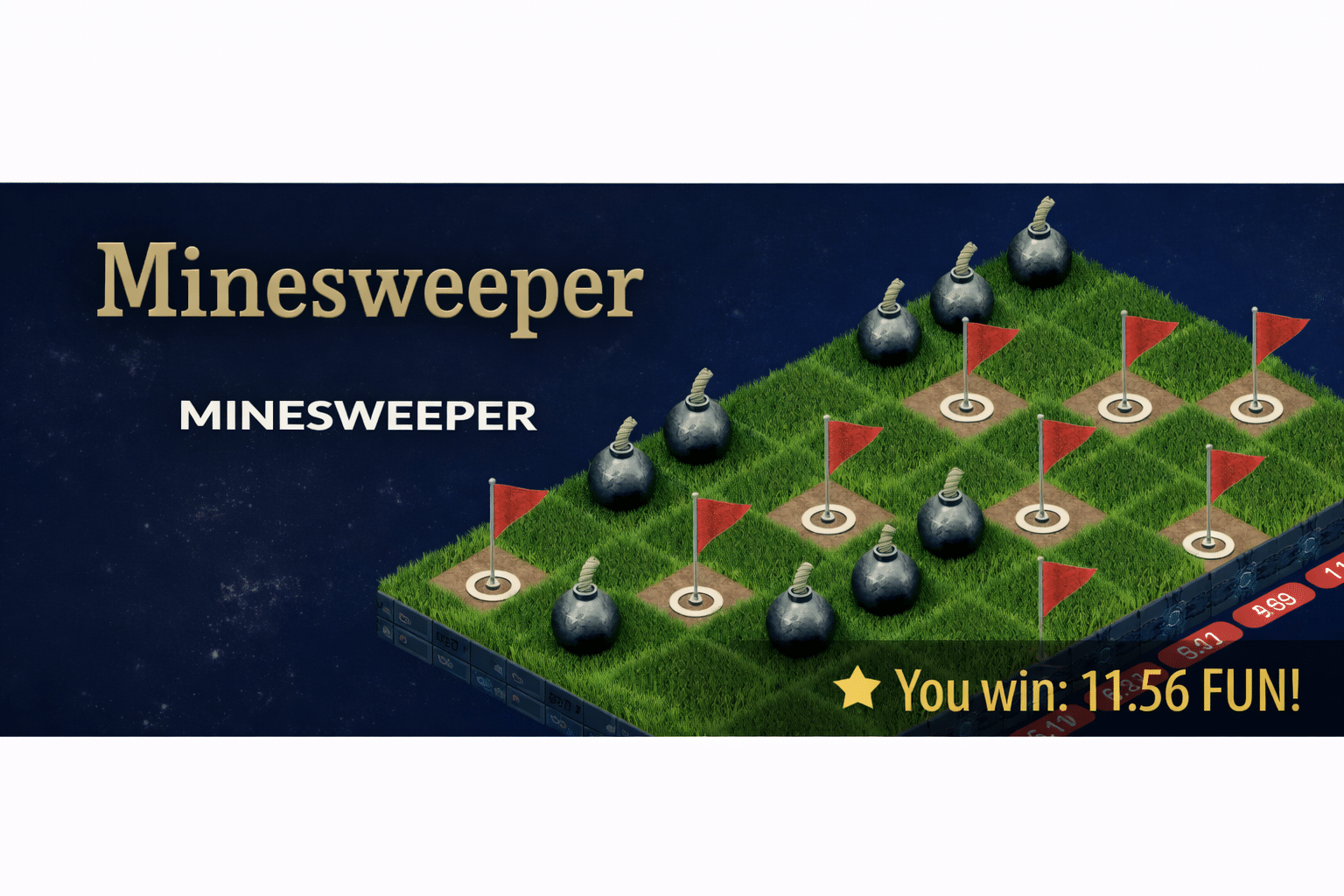
- Grid-based layout
The main play area uses a clear grid structure, allowing users to recognize patterns and make informed choices. - Simple visual indicators
Icons, numbers, and symbols are displayed with high contrast to improve readability. - Consistent spacing and alignment
Each grid cell is evenly spaced, creating a balanced and easy-to-follow layout. - Minimal color palette
Colors are used strategically to highlight important elements without overwhelming the screen.
Interaction Flow and User Experience
Minesweeper follows a structured interaction flow that encourages thoughtful engagement.
Typical interaction steps include:
Selecting a grid cell
Observing immediate visual feedback
Interpreting indicators shown on the grid
Continuing exploration based on logic and pattern recognition
This predictable flow helps users quickly understand how the interface responds to actions.
Mobile Optimization and Accessibility
The Minesweeper Mini Game is optimized for mobile devices, ensuring a smooth experience across different screen sizes.
Mobile-friendly features include:
- Touch-optimized grid cells
- Responsive layout adjustments
- Stable performance with minimal animations
- Clear text and icon scaling for smaller screens
These design choices ensure accessibility for users of all experience levels.
Role of Minesweeper in the Mini Games Collection
Within the Mini Games category, it adds variety by introducing a logic-based gameplay style. It complements faster or chance-based mini games by offering a more thoughtful and analytical interface experience.
Minesweeper contributes to the category by providing:
- A strategic alternative within Mini Games
- A familiar format with modern presentation
- A demonstration of grid-based UI design
How to Play: Step-by-Step Guide
The Minesweeper Mini Game is a grid-based logic game where users rely on observation and pattern recognition. Instead of fast reflexes, rewards careful thinking. The interface provides visual clues (mainly numbers) that help users decide which cells are safe to open next.
The goal is to clear as many safe cells as possible by using the information shown on opened cells to avoid hidden danger cells.
Step 1: Understand the Grid and Closed Cells
When you enter, you will see a board made of closed cells (often shown as squares). At the beginning:
-
All cells look identical
-
No clues are visible yet
-
Your first action is simply choosing a cell to reveal information
This clean starting screen is intentional: it keeps the interface simple and allows the game to reveal information progressively.
Step 2: Open a Cell to Reveal Clues
Tap (mobile) or click (desktop) one cell to start. After opening:
-
The cell may show a blank space (meaning no nearby danger cells)
-
Or it may show a number (meaning a clue about nearby cells)
-
In some interfaces, opened areas may expand automatically if the clue indicates safe space
This instant feedback is one of the strongest parts of it’s UI design—results are clear and immediate.
Step 3: Learn What the Numbers Mean
Numbers are the main logic system in Minesweeper.
-
A number on an opened cell tells you how many danger cells are adjacent to it.
-
“Adjacent” typically means the 8 surrounding cells (up, down, left, right, and diagonals).
Example logic:
-
If a cell shows 1, then exactly one of the surrounding cells contains danger.
-
If a cell shows 2, then two surrounding cells contain danger.
This is how Minesweeper transforms from guessing into a structured logic puzzle.
Step 4: Use Markers to Track Risk Cells
Most Minesweeper interfaces allow users to mark a cell that they believe contains danger. This is useful because it helps you:
-
Avoid clicking uncertain cells by mistake
-
Keep track of suspected locations
-
Solve patterns more confidently
A good interface will display these markers clearly while keeping the grid readable.
Step 5: Identify Safe Cells Using Simple Patterns
As more cells open, the board begins to form recognizable patterns. A few common situations:
-
If an opened cell shows 1 and only one unopened neighbor remains, that neighbor is likely the danger cell.
-
If an opened cell shows 1 and one neighbor is already marked, the remaining neighbors are usually safe to open.
-
If multiple numbered cells touch the same unopened area, you can compare clues to determine safe paths.
The best way to progress is to open cells gradually while checking how each new clue changes your options.
Step 6: Expand Safe Zones Efficiently
When you find a safe area:
-
Open surrounding cells to widen visibility
-
Use the new numbers to map out nearby risk zones
-
Keep your attention on edges between open and closed cells (that’s where clues matter most)
This approach helps you “grow” safe zones instead of randomly selecting isolated cells.
Step 7: Keep a Consistent Decision Flow
A practical decision rhythm in Minesweeper looks like this:
Open a cell
Read the number (or blank)
Mark suspicious cells if needed
Identify guaranteed safe cells
Open safe cells
Repeat
This consistent loop is why it is often praised for its clean logic-based interface design.
Extra Tips for Playing Minesweeper More Smoothly
Start from corners and edges
Edges reduce the number of adjacent cells, which often makes clues easier to interpret early in the game.
Don’t rush “uncertain” clicks
If you feel stuck, open safer areas first to create more clues. The interface becomes easier when more information is visible.
Use marking consistently
Even a simple marker system can prevent mistakes and speed up your decision-making.
Focus on clue clusters
Numbers close together often provide stronger logic than single isolated clues.
Understanding Minesweeper Visual Cues
BigMumbai Minesweeper relies heavily on clear visual feedback to guide user decisions.
Key visual elements include:
- Number indicators showing nearby special cells
- Distinct symbols used to mark potential risk areas
- Color contrast that improves visibility and focus
- Consistent grid alignment for easier pattern tracking
These visual cues are essential for making informed choices during gameplay.
Tips for Playing Minesweeper More Effectively
While it is simple to start, applying a few strategic tips can help users navigate the interface more confidently.
Practical tips for better interaction:
- Begin from corner or edge cells
These areas often provide clearer initial information and reduce uncertainty. - Observe patterns carefully
Repeated number arrangements can reveal safe paths across the grid. - Avoid rushing selections
Taking time to analyze the grid helps prevent unnecessary mistakes. - Mark uncertain cells visually
Using available markers helps track areas that need further evaluation. - Focus on consistency
Since the layout remains stable, learning where to look improves efficiency.
Visual communication
Minesweeper as a Logic-Based Mini Game
Within the Mini Games category, it stands out by emphasizing thinking over speed. The interface encourages careful observation rather than fast reactions, making it suitable for users who enjoy problem-solving and structured gameplay.
The game demonstrates how a minimalist interface can still provide depth through logical interaction and clear visual communication.
Conclusion
The Mini Games category delivers a collection of lightweight and accessible game interfaces, with BigMumbai Minesweeper serving as a standout example of logic-focused design. Through its clean grid layout, clear visual indicators, and mobile-optimized structure, Minesweeper demonstrates how classic game concepts can be adapted to modern interface standards.
As part of the Mini Games collection, Minesweeper offers users an engaging and easy-to-understand interface suitable for exploration, reference, and UI experience demonstration.